
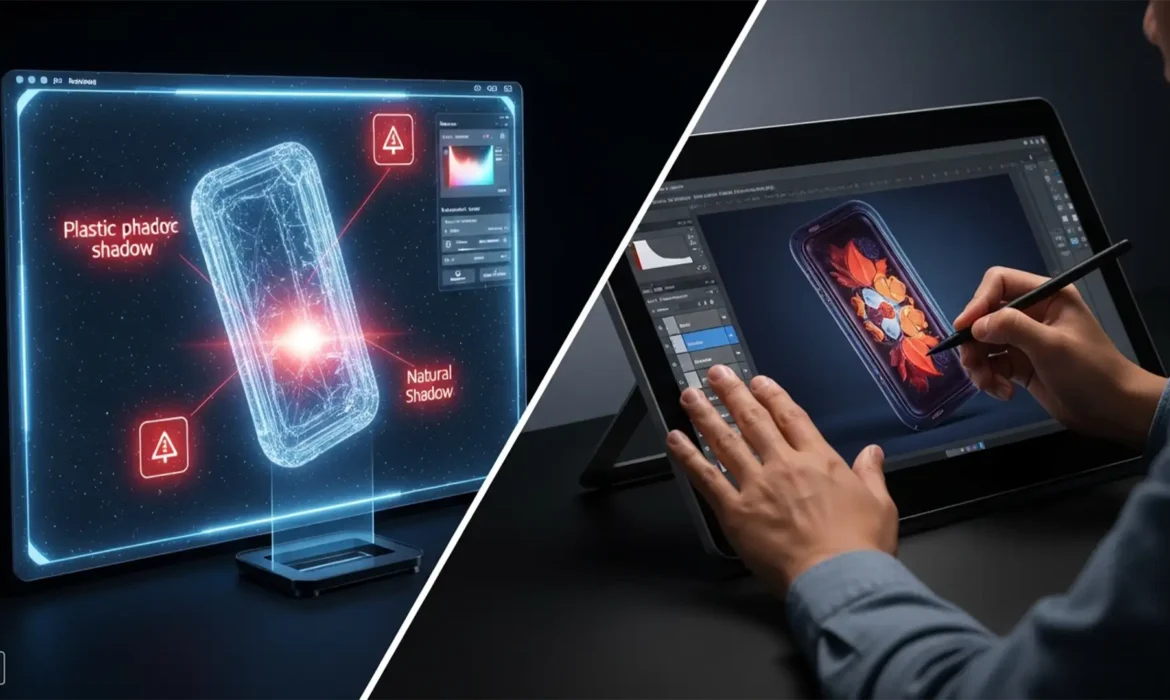
Are your product return rates spiking with “item not as described” claims? You aren’t alone. In 2025, ecommerce brands are tumbling headfirst into the “uncanny valley” of product photography. While tools like Photoshop Generative Fill and Midjourney promise instant, perfect lifestyle backgrounds, they are secretly sabotaging your sales. Customers are spotting the micro-artifacts: geometrically impossible reflections, hallucinated fabric textures, and shadows falling in three different directions. When buyers see an AI-generated product image, brand trust plummets. It’s time to stop letting algorithms guess what your products look like. Here is why savvy brands are returning to human-led product photo editing for trust, authenticity, and higher conversions.
The ‘Uncanny Valley’ of AI Product Photography
The core technical failure of current AI in product editing is its inability to maintain true-to-life physical constraints. Algorithms do not understand physics; they predict pixels. When ecommerce managers rely on automated tools to cut corners, they introduce a phenomenon known as the Uncanny Valley—images that look almost real but possess subtle, unsettling flaws that trigger consumer skepticism.
When consumers spot artifacting in a product image, they immediately question the legitimacy of the brand. If a company fakes its product photos, what else are they faking?
Why AI is Driving Up Ecommerce Return Rates
The consequences of relying solely on AI go beyond aesthetics; they directly impact your bottom line.
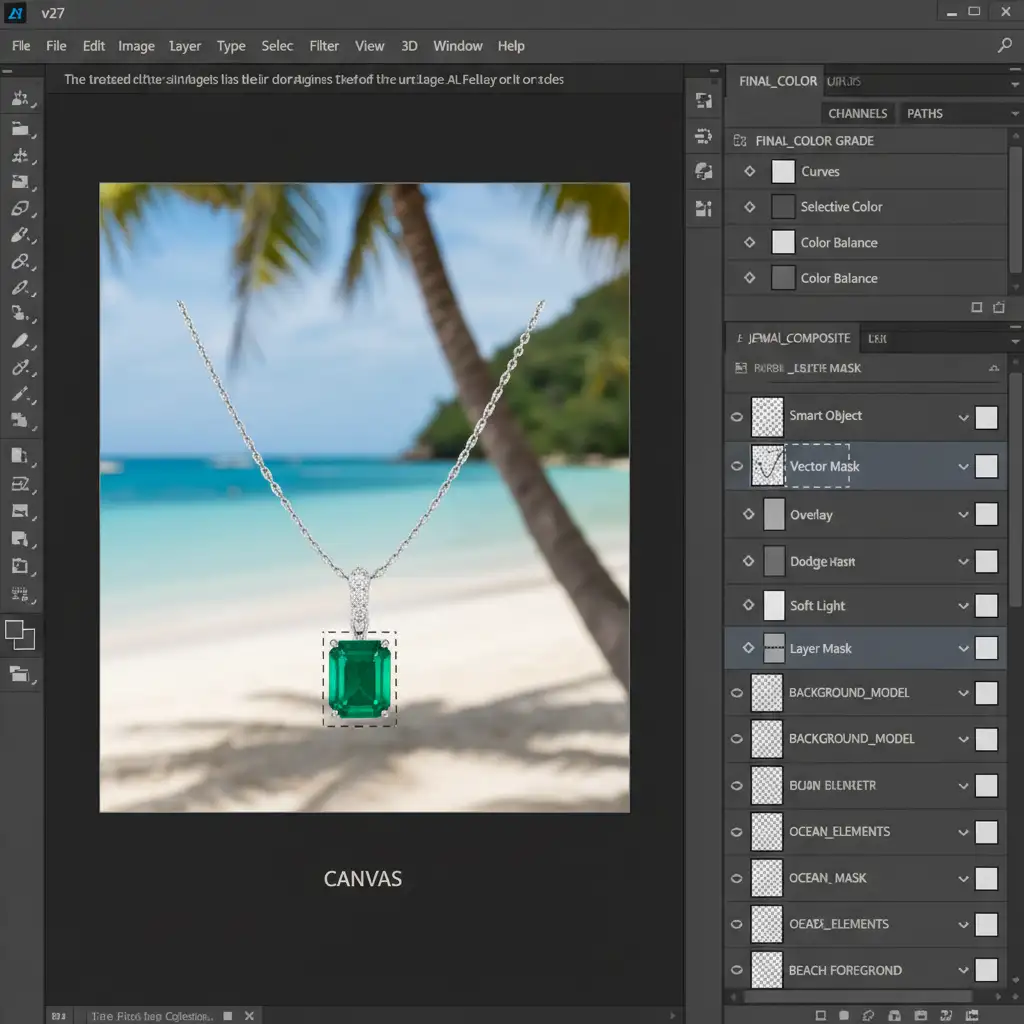
- Hallucinated Textures: AI upscaling and generation often destroy fine details. Intricate product edges, like fine jewelry chains or faux fur, get merged with the background. Fabric weaves are replaced with melted, plastic-looking pixels.
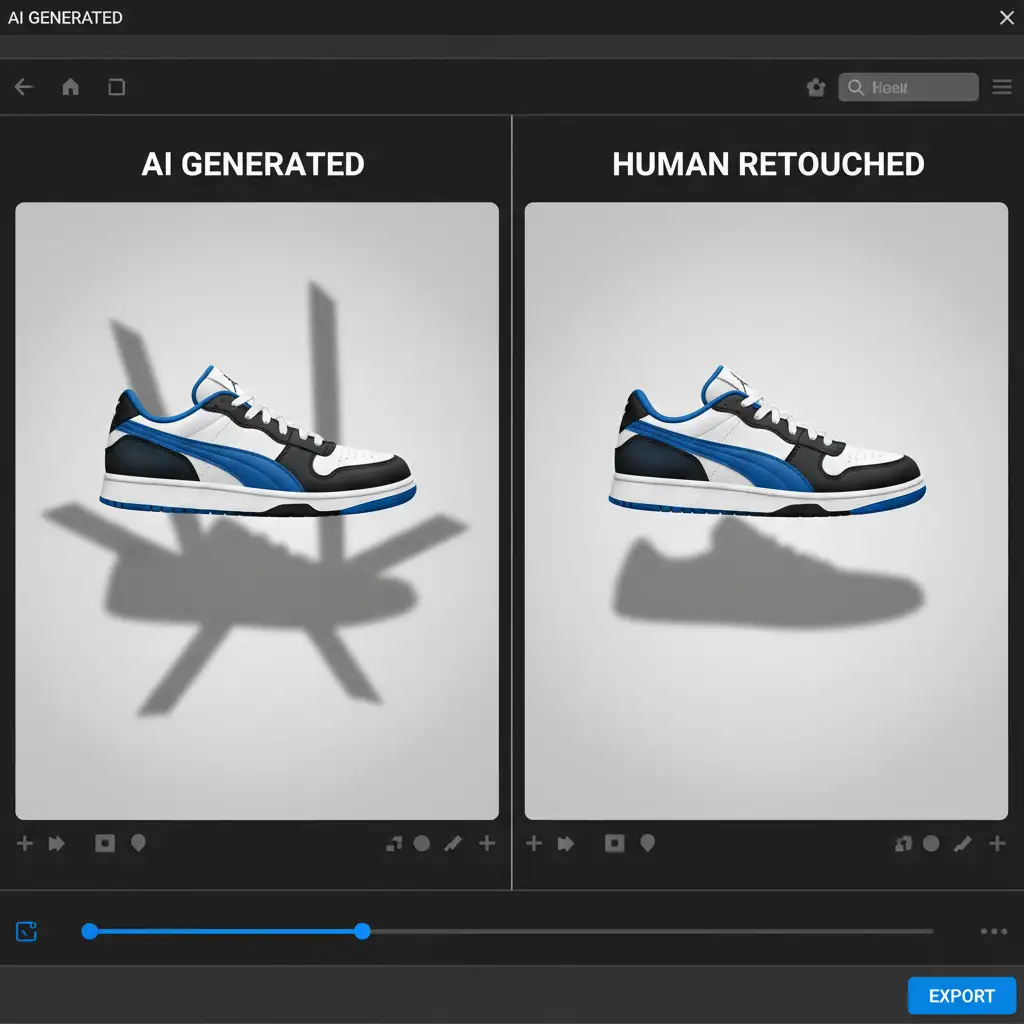
- Mismatched Lighting: AI frequently places a product lit from the left into a background lit from the right. This destroys realistic spatial relationships.
- Inaccurate Colors: AI alters the native color profile of the product to make it “blend” into the generated background. When the customer receives a navy blue shirt instead of the vibrant cobalt shown online, they file an “item not as described” return.
How to Fix the AI Stigma: 3 Professional Retouching Workflows
To preserve exact product geometry and accurate color profiles, brands must adopt a human-led or strictly managed hybrid retouching pipeline. Here are the three technical workflows professional studios use to guarantee pixel-perfect authenticity.
Method A: The Hybrid Workflow (Speed + Accuracy)
For brands that need high volume without sacrificing trust, a hybrid approach is the quick fix. You can utilize AI for bulk background removal, but you must enforce a strict manual quality control step. A human retoucher steps in to correct the Clipping Path edges using the Pen Tool, ensuring no part of the product is accidentally deleted. Finally, the retoucher adds realistic, manually drawn Drop Shadows that obey the actual lighting direction of the original shot.
Method B: The Pro Workaround via Manual Compositing
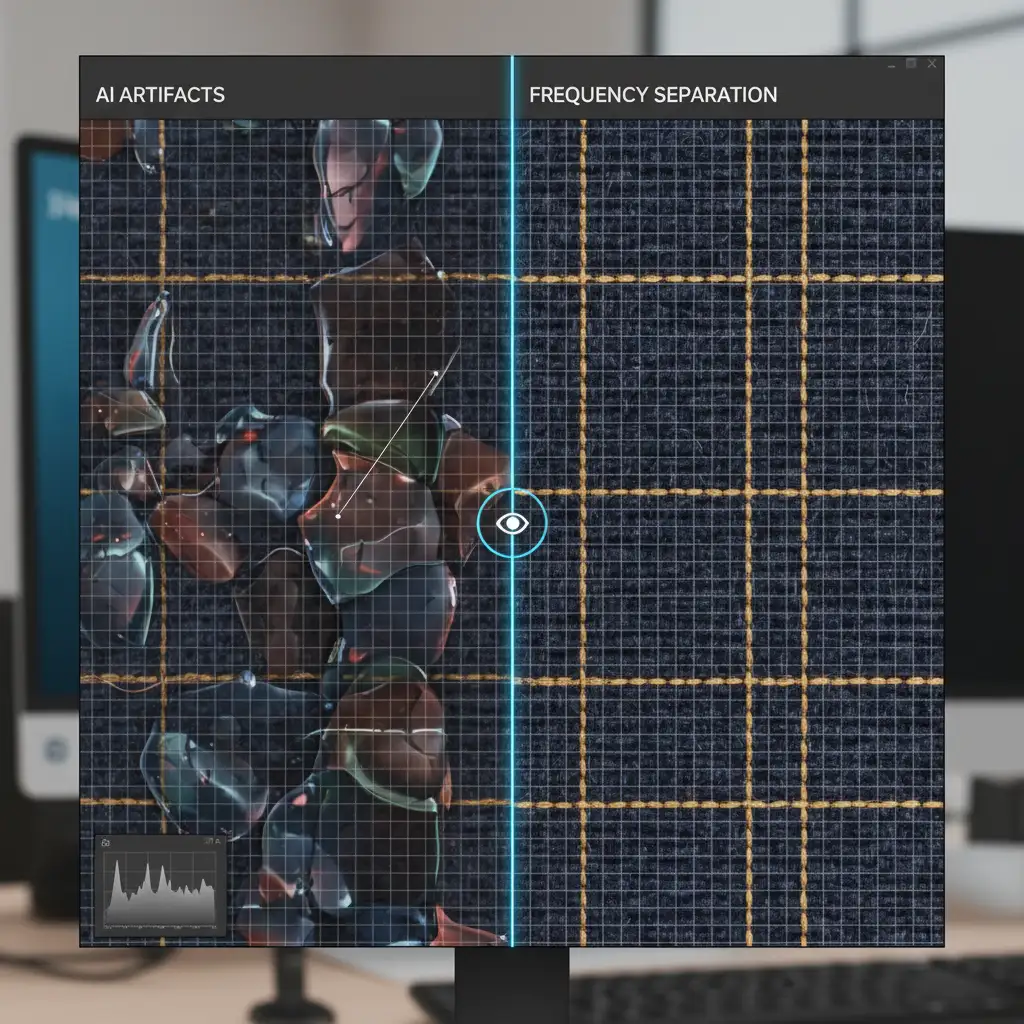
Instead of relying on Photoshop Generative Fill (v25+) to place a product in a lifestyle scene, professionals use traditional compositing. This involves placing the product as Smart Objects within a high-resolution stock or photographed background. Retouchers use precise Layer Masking and manual Dodge and Burn techniques to ensure the lighting matches the environment flawlessly. This method completely eliminates hallucinated pixels while grounding the product in reality.
Method C: The Texture Preservation Pipeline
To eliminate the “plastic” AI look, establish a standard operating procedure that strictly forbids AI upscaling on fine product textures.
- Clean Up: Utilize Frequency Separation to clean up dust, scratches, and manufacturing flaws manually without destroying the underlying texture.
- Color Accuracy: Rely on precise Color Grading via Adjustment Layers to ensure the product’s digital color matches the real-world item perfectly.
Protect Your Brand’s Visual Integrity
In an era where consumers are hyper-aware of digital manipulation, authenticity is your greatest competitive advantage. AI vs Human product photo editing for trust isn’t a debate—it’s a proven reality. Relying on algorithms to guess your product’s physical properties leads to destroyed textures, uncanny lighting, and skyrocketing return rates. Human-led professional retouching remains the only way to guarantee the visual precision that modern ecommerce demands.
Don’t let AI artifacts erode your brand trust. If you want to ensure your product images are flawless, authentic, and highly converting, let the experts handle the heavy lifting. Hire Image Work India and Cloud Retouch for premium, human-led product photo editing services. Our team of professional retouchers specializes in precise clipping paths, flawless color grading, and realistic compositing that turns browsers into loyal buyers. Contact us today to upgrade your visual standards.